What Are Jaw Cysts?
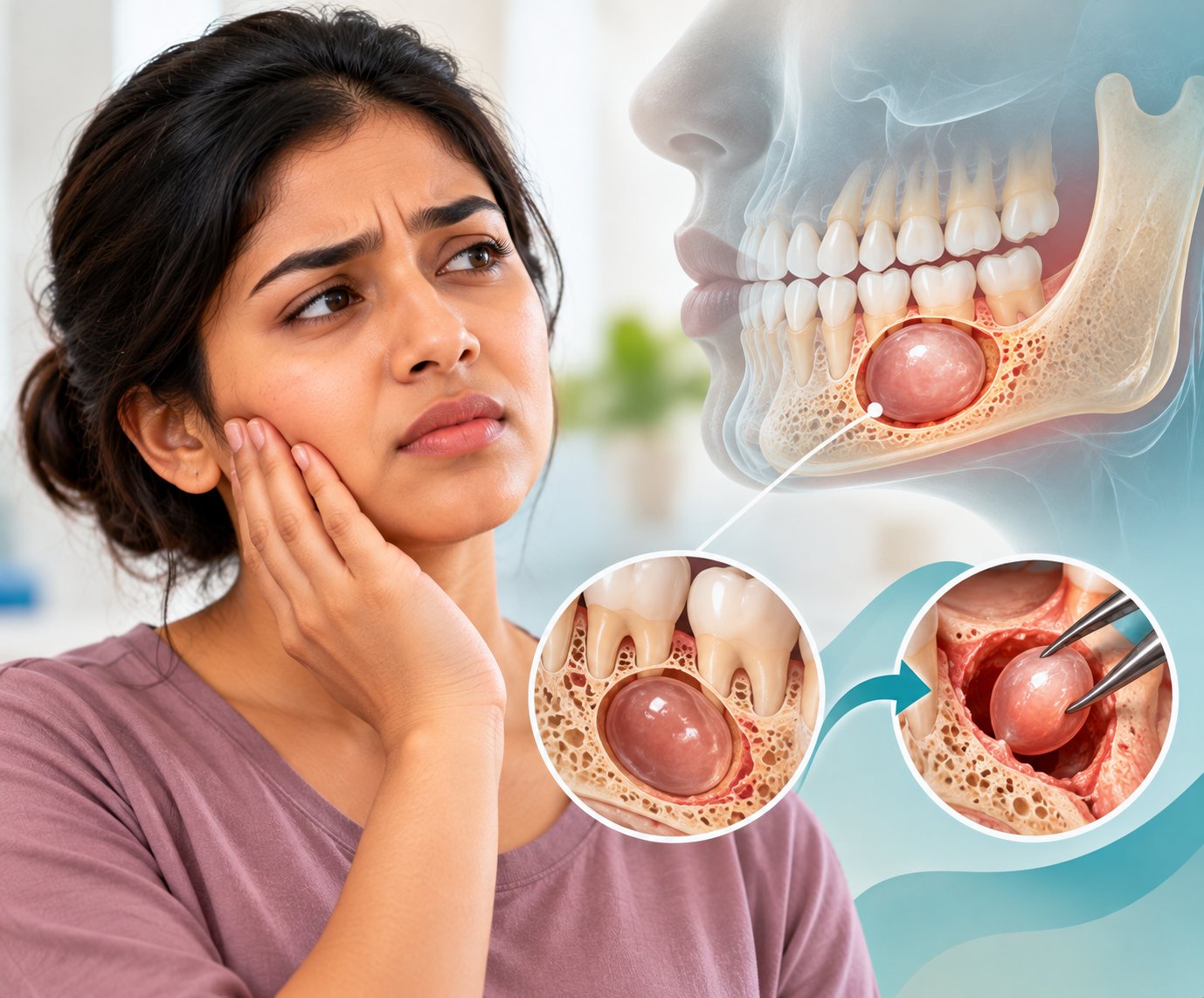
Jaw cysts are small, fluid-filled sacs that form inside the jawbone or gums. Often, these cysts grow slowly and may not cause pain at first. However, they can sometimes damage nearby teeth or bone. Because of this, cyst removal inside the jaw is important for your oral health. Dentists often find these hidden lesions during routine dental X-rays. While some cysts are harmless, others may need treatment to prevent problems.
Common Symptoms of Jaw Cysts
At first, you might not notice any signs. Still, as the cyst grows, you could experience symptoms. For example, you may feel pain or swelling in your jaw. Sometimes, a lump or bump appears inside your mouth. Other symptoms can include:
Because these signs can be subtle, regular dental checkups help catch oral cyst symptoms early.
Causes and Risk Factors
Jaw cysts can develop for many reasons. Most often, they form when a tooth does not grow in properly. For instance, impacted wisdom teeth may increase your risk. In addition, infections from untreated cavities or gum disease can lead to cysts. Other causes include:
Even though anyone can get a jaw cyst, adults are more likely to develop them. Good oral hygiene lowers your risk.
How Jaw Cysts Are Diagnosed
First, your dentist will ask about your symptoms and medical history. Next, they will examine your mouth and jaw. Because jaw cysts are often hidden, X-rays or 3D scans help spot them. Sometimes, your dentist may take a small sample, called a biopsy, to check the cyst type. Early diagnosis makes treatment for cysts in the jaw easier and more effective.
Treatment Options for Jaw Cysts
Treatment depends on the cyst’s size, type, and location. In many cases, your dentist or oral surgeon recommends jaw cyst removal. This simple surgery removes the cyst and helps protect your teeth and bone. Other treatment options may include:
For complex cases, your dentist for jaw lesions may work with a specialist. Most people recover well after treatment.
What to Expect During Cyst Removal
Before the jaw cyst removal procedure, your dentist explains each step. Usually, local anesthesia numbs the area, so you stay comfortable. During surgery, the dentist makes a small cut in your gum to reach the cyst. Then, they carefully remove the cyst and clean the area. Sometimes, stitches are needed to help the gum heal. The entire process often takes less than an hour. Because the procedure is safe, most people go home the same day.
Recovery and Aftercare Tips
After cyst removal inside the jaw, you may have mild swelling or discomfort. However, these symptoms usually improve within a few days. To help your recovery, follow your dentist’s advice. Some helpful tips include:
If you notice heavy bleeding, fever, or severe pain, contact your dentist right away.
Preventing Jaw Cysts
While not all jaw cysts can be prevented, good oral care lowers your risk. For example, brush and floss daily to keep your teeth and gums healthy. In addition, visit your dentist for regular checkups and X-rays. Early treatment of dental problems, such as cavities or gum disease, also helps. If you have a family history of jaw cysts, tell your dentist. This way, they can monitor your oral health closely and suggest the best care for you. Consult the best dentist at Apollo Dental now.